Life has been slightly busy these days, so I'm thinking more in the way of just plain updates this time 'round.
Santa Lucía - December 6-13 marks the week of the patronal festival here in Suchitoto, as Santa Lucía (whose feast day is Dec 13) is the patron saint of the town. I was assured throughout my first months here that it would be a time of locuras (craziness), and indeed it was. Each morning at 4am, a different barrio had the chance to host a small ofrenda at which people from all over town gathered, drank coffee and ate pan dulce, and listened to a small jazz (klezmer-ish?) combo, all the while in the presence of a portable altar to the Virgin Lucía. Then at 5am kicked off the candlelight procession through that particular neighborhood and to the church, where mass was held at about 5:45. After that, each day was different during the daytime, with small artisan fairs, children's days, cultural events, etc. Then (most nights) at 8pm, the given barrio would send a float and various other parade-type elements up the main street out of town and back down the entrance street. This was usually followed up by a fireworks show in the plaza.
BUT THEN...we arrived at the actual day of the feast and Holy Hannah did the locuras ever pile on. The 12th was a Sunday - and the day after the 11th, which was when we celebrated the Virgen de Guadalupe,* thus the second night of even greater celebrations - so there was the regular 9am mass and the noon and 5pm masses were combined into a 4pm, followed by another procession at 5. Then the grand finale fireworks show which was....indescribable. There were regular fireworks the shoot up and explode; there were torritos - little wooden bulls with fireworks attached, which are held by a person who runs around in the center of the plaza; there were various structures set up with fireworks attached to them, including a small model of the church and a Christmas tree. There were an absolute TON of people in the plaza. (Like, if the fire marshal that got upset about South's storage situation were there, he would have just straight up died.) But it was SO GREAT.
And then afterward there was a dance. I met up with a couple of friends from the museum and we went, running into a few more museum folks along the way. It was great - the space was shared between a live band on one street and a dj in the next, each getting an hour at a time to play. Only problem is that the dj's bass system was so strong it actually made me sick to my stomach. But the show went on! We wandered back and forth from one end of the street to the other (the dance is held in a cordoned off street in front of the city government building) for several hours, dancing mostly together and occasionally with (mostly very short) other people. All in all, the night was a success. The Center was closed the next day, so I slept in for the first time in...five months? (Like, I slept almost until 8:45. :)
*We celebrated both ladies a day early because 1) you want to have a dance the night before the actual day off from work, and 2) the Virgen de Guadalupe's day is actually the 12th, but that was a Sunday and you cannot celebrate a feast day on a Sunday (apparently). But we in Suchi couldn't do Guadalupe the day after her real day, since that belonged to Lucy. As you can see, this is all very complicated.
Posadas - The 14th was a day of rest, as far as December festivals are concerned, with the celebration of the Posadas beginning on the 15th. Every evening from the 15th through the 22nd, people gather at a house or restaurant to begin a procession commemorating the time that Mary and Joseph spent looking for a place to rest in Bethlehem. As we walk we sing and try to keep our candles from going out. When we arrive at the next home, a dialogue takes place between the crowd and the owners of the house/business, where we ask to be let in and are repeatedly refused for several attempts, until we're finally allowed entrance and given cookies and something warm to drink. It's a pretty beautiful tradition and I am really glad that dad and Ella will be here for the final night. (It doesn't matter how tired they are after a full day of traveling - we're going.) Come January, I am not going to have any idea what to do with myself.
The day of the scorpion... - Yesterday was quite a day. First thing, right off the bat, was getting dressed. Since it was Friday, I had patinaje, so gym clothes were in order (since usually I skate with the kids). I'd covered for Ariel the day before and hung my clothes outside to air out overnight. Well, BAD IDEA MASTERS. I grabbed them and brought them in and got dressed. When I pulled the bottom of my shirt down, my hand brushed...something, but I didn't make much of it. I checked to see, saw nothing, and figured I'd just touched the hem of the shirt in a strange way. And then, only seconds later, lo and behold, a scorpion fell out of my shorts and scuttled under my backpack.
I am proud to say that I didn't scream. I sort of froze, but I did so silently. I left the room, enlisted the wisdom of Susan, who suggested a combination of bug spray and a shoe, and went in. It sucked, because I didn't want to kill it, but I also didn't want it in the house. But I felt bad because it was only in the shorts because they were warmer than the (50 degree) night air. I had asked Susan for a blanket the night before, and she did not take it as a reason to kill me. Now I was killing something that had only done the same? My overactive organizer's-daughter imagination kicked in and I saw visions of all her little (and not so little?) scorpion allies coming together and reading from their little scorpion bible about she who denied refuge to the one in need against the cold and then getting together and bringing me down. And then I sprayed her and smacked her with my shoe, to which her response was to get pissed and raise her tail. To which my response was to lay the smackdown again and step on the shoe this time. What a horrific squelch. The shoe and the body sat there until the evening. (Bad idea #2: by the evening, the spray had dried and she was sticking to the floor.)
... and the raspon - So I think she got a bit of revenge, at least cosmically, later in the morning. I was skating and I threw myself off the small ramp at the behest of a bunch of 8-year-olds. (Tip: When a story starts like this, you know that everything ultimately stems from the stupidity of the protagonist.) Long story short, I am not 2 for 2 - attempts and pancake falls - when it comes to the ramp. My feet once again got ahead of my center of gravity and I fell straight on my behind. I've fallen several times on the skates and while it hurt for a second, I didn't think much of it. Checked on it at lunch and saw a visible but (kind of disappointingly) small bruise, showed it to a couple people, and ran the afternoon skating session. Then when I got home and went to jump in the shower, I thought to look again. Wow. It was the color of a dark purple eggplant, swollen, etc. After much research (aka, 10 minutes with my colleagues WebMD and WikiPedia), I discovered that I have what must be a subdermal hematoma, basically a big bruise. (I should note that this is different from a subDURal hematoma, which involves bleeding in the brain and is one of the MANY reasons that we require all manner of pads and helmets. While I said this accidentally a couple times to a few people last night, it's not what I have.)
It's already changing color and everything. I think it's going to be pretty cool over the next few days. I'm excited for when it's green and yellow, but highly disappointed that it is in such a hard-to-show-off place. It's only on my upper, outer thigh, so there are plenty of people here I'd be comfortable showing it to. But that would require that I either wear short shorts or drop my pants, neither of which are good options in public.
So yesterday was quite a day. Then Susan and I met up with folks from around town for posadas and walked from the house where we had stopped the night before, to go on to a different home in a different barrio. Today is my museum day, so I'm sitting on my (kind of painful) behind all day long.
Well. This has been today's view into the mundane details of my life. I suppose that makes sense, as life is about to get about as non-mundane as possible when, in FOUR DAYS, the first wave of my family get here! And then the second wave only three days after that! Needless to say, I am thrilled beyond words.
Saturday, December 18, 2010

Sunday, December 5, 2010
De maravilla
I just spent a few hours in the museum with a guy (a kid? he's my age, so more or less) who tried to kill himself the weekend before I came to Suchi. I don't even know him that well, since he's kind of quiet and I'm kind of awkward, but I was realizing this morning that he would be only a story in my life if he'd been successful. I am so, so grateful that he is here.* (The word "here" - specifically in the sense of "I am glad that you are/I am/she or he is here" - is coming to have so many meanings for me. Here in this town or municipality of Suchitoto or in El Salvador or in the world or, more philosophically, existing in the same time and place as I/you do. Hard to describe, but I am glad that he's here, present in every aspect of "here.")
There is a woman named Yanira who lives on the street in town. Generally she sleeps in front of the police station, because some people harass her a lot. I think she comes in and out of her direct relationship with this reality. This, mixed with Spanish, makes it sometimes really hard to carry on a conversation with her. Sometimes she gets really angry, and sometimes she is just happy as a clam. Today, yesterday, and the day before, I saw her at least once per day and every time she was in a good place. I am so glad that she seems, at least in this moment, to be doing well. She is so wonderful. It doesn't matter that she always asks where I've been - usually leading with some version of "it's been a long time since you've been in Suchi, hasn't it?" even though I generally have been around. Yesterday I saw her with two bags of groceries and other general needs. And a huge smile on her face.
We had a big concert last night of Christmas music. The harps played - or rather, the harp students played their harpsicles. (Sorry, I just can't help but use "harpsicle" whenever possible.) Ariel's kids choir sang a few songs, including a couple with the harps(icles). A couple of kids from Alex's poetry and rap class read their own poems. The adult choir sang Dona Nobis Pacem and Capilla Celestial (Angels We Have Heard on High). And then we all came together with Paul's guitar class and performed Somos El Mundo (We Are the World).
We were not always (ever?) fully in key, but my God did we do a beautiful thing in that chapel. To see Alex (my neighbor) and Angel, both of whom come and skate every day, come in their dress shirts, looking kind of awkward, because they're 15 and 17 (respectively) and suddenly dressed up; to hear Alex read his poem about nature; to get bumped into by Luis Felipe, who has the most physical, bouncy interpretation of the "Gloria" ever -- these were extraordinary, but also such ordinary experiences. So wonderful.
After the concert, Ariel and I were sitting together just watching people eat sandwiches and drink hot chocolate. Angel sat with us and asked, "¿Cómo están? ¿De maravilla?" - How are you? (And the only way I can think of translating 'de maravilla' is the lame and clunky "marveling".) But yes, we were indeed marveling at what had just taken place. Marvel seems the perfect partner for the anticipation of Advent.
This morning Suchi held the pre-inauguration for the newly-founded farmers market. Now, being from Minneapolis, I was proud of how normal it was to stand at 'my' farmers market and watch my mayor talk about the city being committed to finding a permanent location for the market. (Turns out this is an international problem. :) But even more so, I was thrilled to see the vendors, the buyers, the produce (all of which was from the municipality), the artisan foods produced with other local stuff, and the Centro Arte youth drum corps, a couple of whom had sung in the concert just 12 hours before.
Marvel. And anticipation. We await the market's growth into something more permanent and secure. We anticipate concerts to come, in which at least half will sing on pitch(!) at least half the time. And I marvel at the smiles of two wonderful people whom I would not have known if circumstances had not proceeded as, thanks be to God, they did.
There is a woman named Yanira who lives on the street in town. Generally she sleeps in front of the police station, because some people harass her a lot. I think she comes in and out of her direct relationship with this reality. This, mixed with Spanish, makes it sometimes really hard to carry on a conversation with her. Sometimes she gets really angry, and sometimes she is just happy as a clam. Today, yesterday, and the day before, I saw her at least once per day and every time she was in a good place. I am so glad that she seems, at least in this moment, to be doing well. She is so wonderful. It doesn't matter that she always asks where I've been - usually leading with some version of "it's been a long time since you've been in Suchi, hasn't it?" even though I generally have been around. Yesterday I saw her with two bags of groceries and other general needs. And a huge smile on her face.
We had a big concert last night of Christmas music. The harps played - or rather, the harp students played their harpsicles. (Sorry, I just can't help but use "harpsicle" whenever possible.) Ariel's kids choir sang a few songs, including a couple with the harps(icles). A couple of kids from Alex's poetry and rap class read their own poems. The adult choir sang Dona Nobis Pacem and Capilla Celestial (Angels We Have Heard on High). And then we all came together with Paul's guitar class and performed Somos El Mundo (We Are the World).
We were not always (ever?) fully in key, but my God did we do a beautiful thing in that chapel. To see Alex (my neighbor) and Angel, both of whom come and skate every day, come in their dress shirts, looking kind of awkward, because they're 15 and 17 (respectively) and suddenly dressed up; to hear Alex read his poem about nature; to get bumped into by Luis Felipe, who has the most physical, bouncy interpretation of the "Gloria" ever -- these were extraordinary, but also such ordinary experiences. So wonderful.
After the concert, Ariel and I were sitting together just watching people eat sandwiches and drink hot chocolate. Angel sat with us and asked, "¿Cómo están? ¿De maravilla?" - How are you? (And the only way I can think of translating 'de maravilla' is the lame and clunky "marveling".) But yes, we were indeed marveling at what had just taken place. Marvel seems the perfect partner for the anticipation of Advent.
This morning Suchi held the pre-inauguration for the newly-founded farmers market. Now, being from Minneapolis, I was proud of how normal it was to stand at 'my' farmers market and watch my mayor talk about the city being committed to finding a permanent location for the market. (Turns out this is an international problem. :) But even more so, I was thrilled to see the vendors, the buyers, the produce (all of which was from the municipality), the artisan foods produced with other local stuff, and the Centro Arte youth drum corps, a couple of whom had sung in the concert just 12 hours before.
Marvel. And anticipation. We await the market's growth into something more permanent and secure. We anticipate concerts to come, in which at least half will sing on pitch(!) at least half the time. And I marvel at the smiles of two wonderful people whom I would not have known if circumstances had not proceeded as, thanks be to God, they did.
Sunday, November 21, 2010
Simpl(y extraordinary) gifts
I received an extraordinary gift yesterday. No, scratch that - I have received dozens of gifts every day of my stay here. But this week, and yesterday in particular, have a couple standouts.
On Friday night, several of us from the Center went to El Sitio to take part in and document (for the museum) their community vigil for Copapayo. Effectively all of the families in the community come originally from Copapayo and the sole survivor of the massacre lives there. There is a sister parish in Michigan that always sends a delegation this time of year to celebrate the commemoration together, which is why the vigil was this weekend. We ate in the house of one of my students then went back to the gazebo/plaza and saw a couple short videos before folks gathered for the procession. Then we all worshiped together in a mass said by the priest from St. Catherine's (this MI parish). After the mass, which was wonderful in so many ways, we went back out in front of the church for music (provided by a group from the neighboring community of El Barío, including Alex's Davíd and Nico, with whom we work in the museum). After the music, the youth of El Sitio - about 90% of them students in 7th-9th grade at the school - got up on the gazebo platform and read the names of the people who were killed in the massacre. After every name, we repeated está presente, "is present" (here/with us). This is a most powerful way recognizing the life and continued presence of people who were killed. And we said it 155 times, including once for an infant of 8 days. It was a gift and an honor to be there sharing the evening with the students and the community that has so opened its arms to me and Christy in our time here.
The gift from yesterday actually starts a couple weeks ago on Margaret Jane's birthday. We (Ariel, Christy, Rosa, Eva, and I) had just gotten back from the actual community of Copapayo on Sunday morning after the vigil the night before and a friend of Margarita's came over for breakfast to celebrate her birthday. The three of us breakfasted together as Margaret Jane and Lita (who is a health promoter in her community) shared stories of their friendship during the war and a trip they took to Geneva to present a paper on health issues among refugee women in El Salvador (of which Lita was then-currently one). This in and of itself was a gift.
During the meal, Lita told me about a book about the experiences of displaced and repatriated communities during and after the war. She told me she would bring it to me and I was really excited, but it sort of fell out of my mind. Well, yesterday, while Ariel and I were doing a lunchtime loop that included food, the ATM, and buying baby shower things for our friends Marvin and Karla, we ran into Lita who was in town for the HUGE confirmation Sunday. (Jay, if you're reading this: 270 confirmands. I think HTLC's new confirmation strategy should include something along the lines of "be Catholic." Just a thought.)
When we saw each other, Lita reached into her bag and pulled out a bound photocopy of the book she had been describing during breakfast. When I told her that I was so thrilled to read it and would get it back to her asap via Susan or Margarita, her response was, "no, no, no - te lo regalo" (basically, "no way, I'm giving it to you"). She made and bound the copy of this book for me after one breakfast conversation and brought it with her since she knew she was coming to town and could give/leave it for me. I almost wept.
 Then, back at the museum, I got to looking at the book. It has testimonies, songs, poems, drawings, chronologies, maps - all from people who lived either in refugee camps in Honduras or Nicaragua or in internally displaced camps within El Salvador, such as Calle Real (where Margaret Jane worked for five years in the 80s - and where she and Lita met). Vilma, the other person working the museum for the day, recognized the book and we looked through it together. As it turns out, she was born in Mesa Grande, one of the camps in Honduras, and lived there until she was 6 years old. She knew the tunes of several of the songs and sang them for me, right there in the entrance to the museum.
I...don't know what to do with all of this. I mean, I know of course that we're going to make another copy of the book for the museum and probably a couple more for the other volunteers. The practical, obvious steps. But what I'm actually going to DO with this embodied, copied, bound love that I received yesterday? That is still developing.
Meanwhile, we have grand plans for a Thanksgiving feast this Thursday and I will have no problem thinking of things I'm thankful for.
On Friday night, several of us from the Center went to El Sitio to take part in and document (for the museum) their community vigil for Copapayo. Effectively all of the families in the community come originally from Copapayo and the sole survivor of the massacre lives there. There is a sister parish in Michigan that always sends a delegation this time of year to celebrate the commemoration together, which is why the vigil was this weekend. We ate in the house of one of my students then went back to the gazebo/plaza and saw a couple short videos before folks gathered for the procession. Then we all worshiped together in a mass said by the priest from St. Catherine's (this MI parish). After the mass, which was wonderful in so many ways, we went back out in front of the church for music (provided by a group from the neighboring community of El Barío, including Alex's Davíd and Nico, with whom we work in the museum). After the music, the youth of El Sitio - about 90% of them students in 7th-9th grade at the school - got up on the gazebo platform and read the names of the people who were killed in the massacre. After every name, we repeated está presente, "is present" (here/with us). This is a most powerful way recognizing the life and continued presence of people who were killed. And we said it 155 times, including once for an infant of 8 days. It was a gift and an honor to be there sharing the evening with the students and the community that has so opened its arms to me and Christy in our time here.
The gift from yesterday actually starts a couple weeks ago on Margaret Jane's birthday. We (Ariel, Christy, Rosa, Eva, and I) had just gotten back from the actual community of Copapayo on Sunday morning after the vigil the night before and a friend of Margarita's came over for breakfast to celebrate her birthday. The three of us breakfasted together as Margaret Jane and Lita (who is a health promoter in her community) shared stories of their friendship during the war and a trip they took to Geneva to present a paper on health issues among refugee women in El Salvador (of which Lita was then-currently one). This in and of itself was a gift.
During the meal, Lita told me about a book about the experiences of displaced and repatriated communities during and after the war. She told me she would bring it to me and I was really excited, but it sort of fell out of my mind. Well, yesterday, while Ariel and I were doing a lunchtime loop that included food, the ATM, and buying baby shower things for our friends Marvin and Karla, we ran into Lita who was in town for the HUGE confirmation Sunday. (Jay, if you're reading this: 270 confirmands. I think HTLC's new confirmation strategy should include something along the lines of "be Catholic." Just a thought.)
When we saw each other, Lita reached into her bag and pulled out a bound photocopy of the book she had been describing during breakfast. When I told her that I was so thrilled to read it and would get it back to her asap via Susan or Margarita, her response was, "no, no, no - te lo regalo" (basically, "no way, I'm giving it to you"). She made and bound the copy of this book for me after one breakfast conversation and brought it with her since she knew she was coming to town and could give/leave it for me. I almost wept.
 Then, back at the museum, I got to looking at the book. It has testimonies, songs, poems, drawings, chronologies, maps - all from people who lived either in refugee camps in Honduras or Nicaragua or in internally displaced camps within El Salvador, such as Calle Real (where Margaret Jane worked for five years in the 80s - and where she and Lita met). Vilma, the other person working the museum for the day, recognized the book and we looked through it together. As it turns out, she was born in Mesa Grande, one of the camps in Honduras, and lived there until she was 6 years old. She knew the tunes of several of the songs and sang them for me, right there in the entrance to the museum.
I...don't know what to do with all of this. I mean, I know of course that we're going to make another copy of the book for the museum and probably a couple more for the other volunteers. The practical, obvious steps. But what I'm actually going to DO with this embodied, copied, bound love that I received yesterday? That is still developing.
Meanwhile, we have grand plans for a Thanksgiving feast this Thursday and I will have no problem thinking of things I'm thankful for.
Saturday, November 13, 2010
Matthew and nunca, nunca mas
I don't believe that God opened my bible to any certain page this morning when I decided to sit down and read a bit. I'd finished what has become my morning ritual of breakfast and coffee on the roof, listening to the sounds of Suchitoto coming to life and watching the color change against the trees, buildings, and distant rolling hills. I didn't have to be at work until 7:45-ish and I'd showered last night (that's the real reason I had extra time), so I figured I'd sit down with either the bible or my crossword puzzle book. This time, the bible won. (Full disclosure: usually it goes the other way.)
For whatever reason, after flipping through a couple of non-starters (the Exodus and Hosea included), I landed in the Passion section of Matthew. I am leaving Suchitoto this afternoon to spend the evening and night at the Universidad Centroamericana for the vigil commemorating the massacre of six Jesuits and two of their colleagues. There is much to be said just about this particular event in history. I will leave this to your own research, only to say that they were massacred by the Salvadoran military – by US-trained officers – on the night of November 15/16, 1989, on the grounds of the University where they lived. Brutal doesn't even begin to describe the manner of their assassination. Because they were in many ways the intellectual core of the church-based liberation and peace movements, the soldiers removed their brains and strew them across the garden outside their dormitories. It is this level of violence that we commemorate tonight – and to which we say “never again,” though we know that that is an unachievable reality. In any case, we recommit ourselves to the struggle that this might one day be true.
I don't know that I've ever read any of the Passion narratives outside of Holy Week before, so doing so in the fall, a good six months away from last Easter and this, seemed appropriate. It wasn't until I actually got into the thing that I started to realize just how appropriate it was for this day – this time in which we are celebrating the lives of massacred people all over the country, with Día de los Difuntos, the Copapayo massacre, and now the Jesuits. There are plenty of possible parallels to draw between the two stories, but more than anything, several new things just jumped to my eye.
Matthew 26:40 – Since our last spirituality night, we've been talking recently about all of the different ways that a seemingly small comment or gesture can be a profound word of “I love you.” Even while we were at Peggy's discussing this last Sunday, Alex's campo brother called him to check on how he was doing and to make sure he was going to be able to catch the bus home. When Alex sat back down from the call, Peggy very gently interjected, “That was Chomingo saying I love you.”
I read Jesus' words in this verse as an I love you. So much is lost when you only have text, so I'd always read and heard these words as a rebuke before. But think about it. “Can you not keep watch with me for one hour?” Jesus might have a better idea than the others how precarious things will be after his death, and the fact that they wipe out quickly – certainly understandable given what seems to have been an intense period in their ministry together! - is not promising. It is out of concern, not anger, that I hear Jesus underlining that (more or less) “you have to be able to do this.” “I love you.” I love you and I'm about to be not here in the same way that you are used to me being here and it scares me to think that you aren't ready. And I love you. [I feel I should follow this by saying that it does really freak me out to put words into the mouths of biblical characters. But here I am, doing it anyway.]
26:50 – Only ten verses later. Judas kisses Jesus and Jesus says to him, “Do what you came for, friend.” FRIEND. He just coined the phrase “the kiss of death” and Jesus calls him friend. There is, as I see it, a profound understanding there of Judas's helplessness in all of it. I think about the kids here who end up in gangs because...they have no other options. Because they are threatened (or more likely their families are) and so they have to join. Or because a person has to eat and unemployment hovers around 70% here. Or because they simply live in an area that already belongs to a particular gang and in order to be protected in their own neighborhood, they must belong.
I think about the sixteen kids (all but one between 18 and 22 – aka, between Ella's and my ages) burned to death in the fire that raged through the juvenile prison this week, and the 22 more in hospitals, many with burns so bad that they will definitely die as well. They were all put there under the new anti-gang law passed this summer. The gangs here do terrible things, usually to people who have done nothing to call their attention. Not that one can ever earn the violence that is rained down by the gangs. But the kids in that prison – so many of the people in El Salvador's crowded-three-times-past-capacity prisons – were not the folks calling the shots. All too often, those are the same people who own the private security firms, whose pockets thicken when ordinary people feel so much fear that they hire guards.
I think about those guys and the fact that they were in prison, like so many of their (my) brothers and sisters around the world, because of actions that they had only a small part in actually taking on. And I hear Jesus call them “friend.” Clothed in tattoos in a country where that only means one thing, to the extent that my “pollito” (little chicken – it's actually a hummingbird) tattoo catches attention and interest from all sides, I hear an understanding in Jesus's voice that rejects completely what they have done, but sees the utter lack of choice (or at least seeming lack, which is just as crushing) that these guys faced, embraces them, returns a kiss of death with a kiss of life and peace, and says “I love you.”
So this week we celebrate the Jesuits. We will say the presente after the names of Ignacio Ellacuría, Segundo Montes, Celina Ramos, Elba Ramos, Ignacio Martín Baró, Amando López, Joaquín López y López, and Juan Ramon Moreno. We will also say, maybe silently, presente in the names of Antonio Cartagena, Juan Carlos Romero, Gerardo Enrique Alvarado, and the rest of the young men who died in the fire. We will celebrate the lives and grieve the deaths of children of God put to death by violence and poverty. And we will offer our small but resolute nunca mas.
Saturday, October 30, 2010
Solo Dios con nostotros
First things first. I'm realizing that I've kind of thrown most of you into the deep end without giving you floaties or anything like them, with regard to where I am and the general situation here. Without meaning to be mean (since I'm a Minnesotan), I have to say plainly and clearly: I have never been to South America and it is not where I am now. In fact, there are a full three countries plus a little corner of Honduras between me and the very tippy top of South America. :) El Salvador is in Central America, which is the land that connects the continents of North and South America, also at times known as the Americas and also (especially outside of the US, where we consider ourselves THE ONLY) known simply as America. (That's right, in a lot of places, there is not a recognized north/south divide.)
I found a couple of maps to orient you to more or less where I am. (Now let's see if I can actually put them up on the blog.)
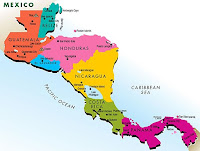
First, Central America, the general region. El Salvador is the little blue rectangular one nestled in between Guatemala and Honduras.
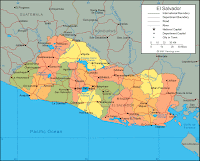 Alright, second, El Salvador itself. Click on this photo and it should get bigger. You'll see a finger-shaped lake an inch or so directly above the capital, San Salvador. That is Lake Suchitlan, on which Suchitoto (the town where I live) is situated. Suchi is also listed on the map, on the south side of the lake. Two days a week I take a boat sort of around the lake, staying on the south shore and not actually crossing it, to the school I teach in.
Ok, hopefully this helps a bit. Also, I'm not especially close to the equator. I'm probably about as close to the equator (and this is a big guess) as Minneapolis is to the North Pole. Sorry for having made assumptions before and not given y'all the tools that may have been useful. Now you can have a better picture in your head of where I am. (And I think, if today is indeed daylight savings, that we are even in the same hour as Minnesota. We're basically straight south.)
************
That was a nice geography lesson. Now on to something that is really current in the country. It effectively hasn't rained here at all this month. This is unusual for October. Usually October is the strong end to the rainy season and an important time in the bean crop cycle. The two times it has rained, it has been fast and furious - not what you want hitting DRY topsoil. This being the case, the bean crop is completely lost. Beans are already up above a dollar a pound (and have been for a couple weeks). This means that most people simply aren't eating them, whether they buy beans or grown their own. Since this is often the primary source of protein...well, you probably get it. And since most kids are getting out of school, they are facing two months without the government-provided nutrition program food that they receive in school. (Which isn't perfect, but it almost always has protein. And for the kids that really need them, it simply has calories to get through the day.)
One of the vigilantes at the Art Center and I were talking a few days ago. He works here over night and during the day works his land. His beans are gone. He said that there are some that might re-plant, hoping for some unexpected rain later in the season, but we are rapidly hurtling toward the dry, dry time of the year. Toward the end of the conversation, Eduardo said something that hit me hard: "It's only God with us now."
In any other setting in which I've ever found myself, that would seem like perhaps the bleakest statement possible. But somehow, for a Salvadoran to say that, even given what relatively little I know from my time here, it was galvanizing. There was no despair in Eduardo's voice when he said it, and when he looked at me and turned to walk away, there was sadness AND fire in his eyes. So many people in El Salvador are already all too used to having only God with them. But given that reality, they know better than I ever will that these situations offer no invitations to lose hope.
I don't know enough about agriculture - here or anywhere - to know what realistic expectations might look like in this scenario. But I do know that what is realistic or pragmatic has never before been able to capture or enclose Salvadorans in despair. (Of course I speak in hyperbole, but not by much.)
Prayers are more than welcome. Turning off the lights and taking other small actions - as well as big ones - in the interest of slowing climate change is all the more welcome. Buying beans from close by instead of beans - or whatever food - from far away wouldn't hurt either.
Happy Halloween. The day when the veil between life and death is at its thinnest. While something rings appropriate that this precariousness would come at such a precarious time of the year, let's remember and reaffirm that none ought to live in such uncertainty. For those of us who worship a God who invited herself to a meal in the home of a tax collector - someone who was not a very good neighbor - now seems like a good time to recommit ourselves to living as good neighbors, on the incomprehensible scale that that word takes on, and refusing to let God be the only one who cares so actively.
I found a couple of maps to orient you to more or less where I am. (Now let's see if I can actually put them up on the blog.)

First, Central America, the general region. El Salvador is the little blue rectangular one nestled in between Guatemala and Honduras.
 Alright, second, El Salvador itself. Click on this photo and it should get bigger. You'll see a finger-shaped lake an inch or so directly above the capital, San Salvador. That is Lake Suchitlan, on which Suchitoto (the town where I live) is situated. Suchi is also listed on the map, on the south side of the lake. Two days a week I take a boat sort of around the lake, staying on the south shore and not actually crossing it, to the school I teach in.
Ok, hopefully this helps a bit. Also, I'm not especially close to the equator. I'm probably about as close to the equator (and this is a big guess) as Minneapolis is to the North Pole. Sorry for having made assumptions before and not given y'all the tools that may have been useful. Now you can have a better picture in your head of where I am. (And I think, if today is indeed daylight savings, that we are even in the same hour as Minnesota. We're basically straight south.)
************
That was a nice geography lesson. Now on to something that is really current in the country. It effectively hasn't rained here at all this month. This is unusual for October. Usually October is the strong end to the rainy season and an important time in the bean crop cycle. The two times it has rained, it has been fast and furious - not what you want hitting DRY topsoil. This being the case, the bean crop is completely lost. Beans are already up above a dollar a pound (and have been for a couple weeks). This means that most people simply aren't eating them, whether they buy beans or grown their own. Since this is often the primary source of protein...well, you probably get it. And since most kids are getting out of school, they are facing two months without the government-provided nutrition program food that they receive in school. (Which isn't perfect, but it almost always has protein. And for the kids that really need them, it simply has calories to get through the day.)
One of the vigilantes at the Art Center and I were talking a few days ago. He works here over night and during the day works his land. His beans are gone. He said that there are some that might re-plant, hoping for some unexpected rain later in the season, but we are rapidly hurtling toward the dry, dry time of the year. Toward the end of the conversation, Eduardo said something that hit me hard: "It's only God with us now."
In any other setting in which I've ever found myself, that would seem like perhaps the bleakest statement possible. But somehow, for a Salvadoran to say that, even given what relatively little I know from my time here, it was galvanizing. There was no despair in Eduardo's voice when he said it, and when he looked at me and turned to walk away, there was sadness AND fire in his eyes. So many people in El Salvador are already all too used to having only God with them. But given that reality, they know better than I ever will that these situations offer no invitations to lose hope.
I don't know enough about agriculture - here or anywhere - to know what realistic expectations might look like in this scenario. But I do know that what is realistic or pragmatic has never before been able to capture or enclose Salvadorans in despair. (Of course I speak in hyperbole, but not by much.)
Prayers are more than welcome. Turning off the lights and taking other small actions - as well as big ones - in the interest of slowing climate change is all the more welcome. Buying beans from close by instead of beans - or whatever food - from far away wouldn't hurt either.
Happy Halloween. The day when the veil between life and death is at its thinnest. While something rings appropriate that this precariousness would come at such a precarious time of the year, let's remember and reaffirm that none ought to live in such uncertainty. For those of us who worship a God who invited herself to a meal in the home of a tax collector - someone who was not a very good neighbor - now seems like a good time to recommit ourselves to living as good neighbors, on the incomprehensible scale that that word takes on, and refusing to let God be the only one who cares so actively.
Wednesday, October 27, 2010
You're not the boss of me (aka, mujer super-penosa)
I'm getting back in the rhythm of journaling these days and ended up writing for a bit this morning. It was a time of some good reflection and it seemed worth sharing, if a bit personal. So...be gentle?
The first thing is that tomorrow is my grandpa John's 94th birthday. So in the midst of my day in El Sitio I will be giving thanks for the life and gifts of a person who is far away, yet so present with me every single day. After a really frightening illness a couple years ago, it is even more clear that every, every day is a blessing and I give thanks for both the number of his days and the richness of them. The role he has played in my life is indescribable, both through his own presence and through that of his children and other grandchildren.
Some questions that we've (the CAP equipo of volunteers) been turning over for a bit, along with What feeds me?, include Who am I? What do I believe? and one of mine, using imagery that we came up with on my last venture down here (with CGE), What does my puzzle piece look like these days?
There is a line from a Carrie Newcomer song that keeps popping up in my head: It's not the things I've gone and done I'll regret or be ashamed of, but the things I did not say or do just because I was afraid.
More and more, I'm realizing that I am a person with a lot of pena. (Would that there were a good English translation for pena. The meaning in which I'm using it is a sort of fear-shame-hesitation.) I have lived in the presence and shadows of so many extraordinary people, I think I am - and in many ways have let myself be - intimidated by their talent. I've always had the sense that I have the passion but lack the tools and skills.
As tempting as it is to look back and analyze times in my life where I see the evidence of this, I want to look forward. I want to claim the opportunities to take risks, make myself vulnerable, and live into my potential. My pena keeps me from doing that. It also, I think, leaves no room for true humility, which is utterly not based in fear, but rather a conviction that I am indeed a child of an incomprehensible God and the only proper response to that is awe.
These thoughts are going to keep percolating throughout myday life. It's been a relatively productive morning - I have laundry up, but I hope it rains. I didn't get all the soap out anyway.
The first thing is that tomorrow is my grandpa John's 94th birthday. So in the midst of my day in El Sitio I will be giving thanks for the life and gifts of a person who is far away, yet so present with me every single day. After a really frightening illness a couple years ago, it is even more clear that every, every day is a blessing and I give thanks for both the number of his days and the richness of them. The role he has played in my life is indescribable, both through his own presence and through that of his children and other grandchildren.
Some questions that we've (the CAP equipo of volunteers) been turning over for a bit, along with What feeds me?, include Who am I? What do I believe? and one of mine, using imagery that we came up with on my last venture down here (with CGE), What does my puzzle piece look like these days?
There is a line from a Carrie Newcomer song that keeps popping up in my head: It's not the things I've gone and done I'll regret or be ashamed of, but the things I did not say or do just because I was afraid.
More and more, I'm realizing that I am a person with a lot of pena. (Would that there were a good English translation for pena. The meaning in which I'm using it is a sort of fear-shame-hesitation.) I have lived in the presence and shadows of so many extraordinary people, I think I am - and in many ways have let myself be - intimidated by their talent. I've always had the sense that I have the passion but lack the tools and skills.
As tempting as it is to look back and analyze times in my life where I see the evidence of this, I want to look forward. I want to claim the opportunities to take risks, make myself vulnerable, and live into my potential. My pena keeps me from doing that. It also, I think, leaves no room for true humility, which is utterly not based in fear, but rather a conviction that I am indeed a child of an incomprehensible God and the only proper response to that is awe.
These thoughts are going to keep percolating throughout my
Saturday, October 23, 2010
It's 3:30pm and we've already had 56 people in the museum today. (That makes it a pretty darn good day.) Nothing extraordinary to report, in general. My days tend to consist of, in rotation, El Sitio, the museum, and patinaje. I work, hang out with the other volunteers, hand out with the folks from the museum, wander town. There is something comfortable about a routine, so long as it doesn't become inertia. I'm getting to know my neighbors, through the young guys who come to patinaje and live next door. (A word on language: English needs a word that works like "joven" that isn't as pretentious as "youth" when referring to a specific number of people.)
The kids in El Sitio are in final exams this week. Christy and I wrote the English exam and Christy proctored it on Wednesday. (I didn't go since I was a bit sick earlier in the week.) Thursday I went and helped with the language arts exam. It's not the most enthralling thing to proctor another teacher's exam, though this one included the word "playboy," so as the only native English speaker, I was in high demand to tell the kids what it meant (which I was also under instructions not to d0). Once a few of them started finishing, I noticed that a sheet of paper was going around and quantities of change recorded - noticed, but didn't think to ask about it. Turns out the kids have to pay for the paper that they write their tests on.
We're starting to get in the habit of going on citas (dates) as volunteers. We got good at doing group stuff before I left and now that we're six, we want to be more intentional about getting to know each other individually as well. We're trying to figure out how we form ourselves into a community, which doesn't come easily (or even naturally, really). And on top of that, how do we act within and interact with the larger communities in which we live. We had a really good conversation yesterday about where we're at and what is really feeding us here. For almost all of us, that answer at least in some way included the kids we work with. But it was a good jumping off point for me to think about other people, places, books, activities that are feeding me as I am here. (And I mean that not just "as I'm here", but as I am here - as in existing, being).
So I want to know: What feeds you? What gives you life and joy? I'm still turning this one over and enjoying the process.
The kids in El Sitio are in final exams this week. Christy and I wrote the English exam and Christy proctored it on Wednesday. (I didn't go since I was a bit sick earlier in the week.) Thursday I went and helped with the language arts exam. It's not the most enthralling thing to proctor another teacher's exam, though this one included the word "playboy," so as the only native English speaker, I was in high demand to tell the kids what it meant (which I was also under instructions not to d0). Once a few of them started finishing, I noticed that a sheet of paper was going around and quantities of change recorded - noticed, but didn't think to ask about it. Turns out the kids have to pay for the paper that they write their tests on.
We're starting to get in the habit of going on citas (dates) as volunteers. We got good at doing group stuff before I left and now that we're six, we want to be more intentional about getting to know each other individually as well. We're trying to figure out how we form ourselves into a community, which doesn't come easily (or even naturally, really). And on top of that, how do we act within and interact with the larger communities in which we live. We had a really good conversation yesterday about where we're at and what is really feeding us here. For almost all of us, that answer at least in some way included the kids we work with. But it was a good jumping off point for me to think about other people, places, books, activities that are feeding me as I am here. (And I mean that not just "as I'm here", but as I am here - as in existing, being).
So I want to know: What feeds you? What gives you life and joy? I'm still turning this one over and enjoying the process.
Subscribe to:
Posts (Atom)